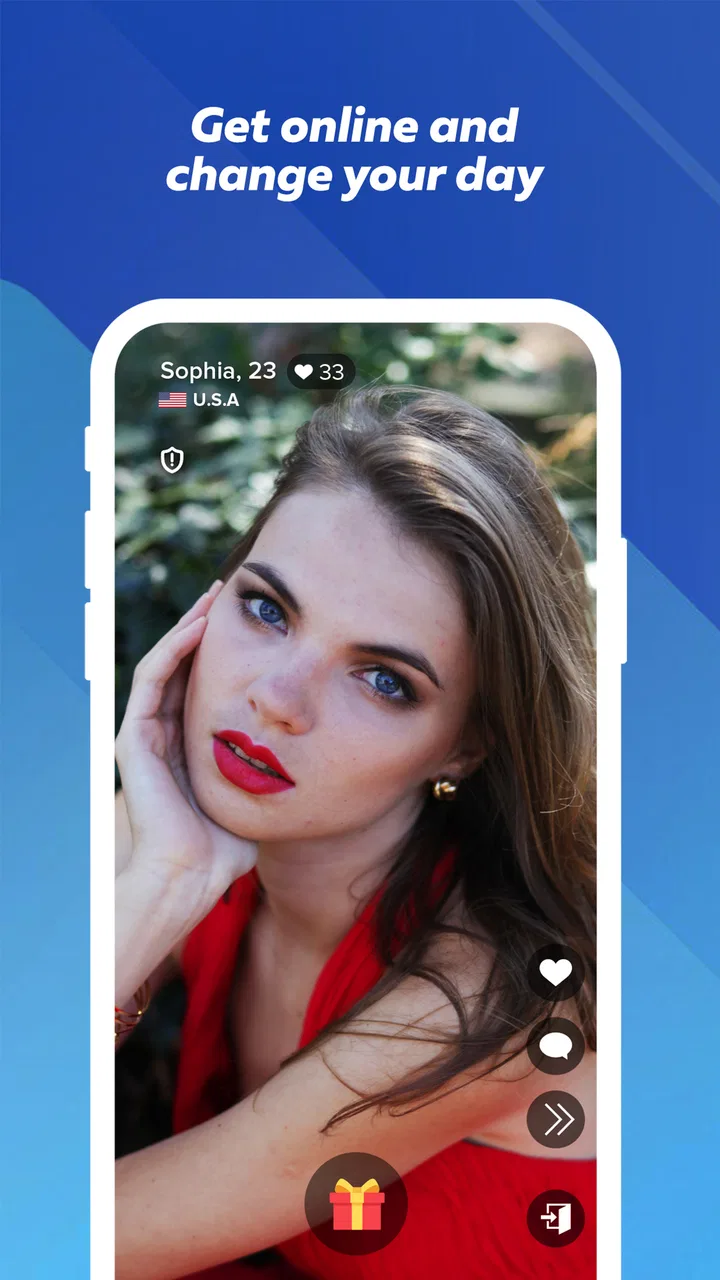
DODO - Live Video Chat
- 4.3
- Rating
- 10.00M
- Installs
- Free
- Price

 Analysis by App-foxy
I approached DODO - Live Video Chat as someone looking for a quick way to meet new people by video rather than maintain another carefully curated social profile. The app sits in the social category and is free to install, with a mature audience rating of 17+. That combination tells you a lot about its intended setting: this is casual, live interaction, not a quiet messaging tool for family updates or a professional networking platform.
My first impression was that DODO is built around immediacy. You are not mainly preparing posts, polishing a profile, or waiting for a conversation to develop over several days. The appeal is the possibility of moving from browsing to a face-to-face exchange quickly. For the right user, that makes the experience feel more human than endless text chats. For someone who prefers control, privacy, or predictable conversations, the same design can feel exposed and uneven.
From opening the app to having a real conversation
I’ll use this section to focus on the transition from launching DODO to feeling at ease in a live exchange, including the small choices that can make that first moment less awkward. I also want to consider how a brief pause to check your surroundings and expectations can help you decide whether to continue, without mistaking quick access for guaranteed compatibility.
You May Also Like

 AccuWeather: Weather Radar
AccuWeather Review: A Quick, Clear Forecast for Everyday Decisions
For everyday plans, the best forecast is the one you can understand quickly. AccuWeather makes rain timing, radar, and local conditions easy to act on, with a few trade-offs.

 Hill Climb Racing
Why Hill Climb Racing Still Turns Crashes Into One More Run
A tiny car, a bumpy hill and one more upgrade: Hill Climb Racing keeps resurfacing because its simple chaos makes every near-miss feel personal.

 AliExpress - Shopping App
AliExpress Makes Global Shopping Feel Personal, but Shoppers Bear the Risk
AliExpress turns a global marketplace into a pocket-sized discovery engine. Its reach is useful, its shopping loop compelling, and its trade-offs easy to miss.

 Lords Mobile: Kingdom Wars
Lords Mobile Is a Kingdom-Building Routine, Not a Quick Match
A case-by-case verdict on the building, battles, device demands, and social commitments that make Lords Mobile rewarding for some players and exhausting for others.

 PDF Scanner app - TapScanner
TapScanner Makes Paperwork Easier to Capture, Check, and Share
TapScanner makes scanning with a phone feel less like a rescue operation and more like a dependable step in getting work done. Its capture tools are useful, though not flawless.

 Block Blast!
 Shows How Much a Puzzle Game Can Leave Out
A quiet grid game shows why puzzle players increasingly value instant clarity, repeatable skill and low-pressure play—and where the genre still needs to catch up.
More From Our News Desk
View All News


Starting with the right expectation
The most important preparation is not technical; it is deciding what you want from the session. DODO makes the most sense when you have a little spare time and are open to meeting someone outside your existing circle. It is less suitable when you need a dependable answer from a particular person, a formal group discussion, or a permanent record of a conversation.
I would also treat the 17+ rating seriously. A mature rating is not a promise that every interaction will suit every adult, and it certainly does not make live video automatically comfortable or safe. Before starting, I would choose a setting where I can end a call without being interrupted, keep personal documents and private surroundings out of view, and avoid sharing identifying details with someone I have just met.
That small preparation improves the whole workflow. A neutral background, headphones if available, and a willingness to leave an awkward conversation are more useful here than spending time trying to create a perfect online persona. DODO is strongest when you use it as a short, low-pressure social experiment rather than as a replacement for close friendships.
The first handoff: from browsing to a live match
The central handoff is the move from looking for an interesting person to actually appearing on camera. This is where DODO differs from familiar social networks. On a conventional platform, you can read a profile, inspect older posts, and decide whether to send a message. A live video service compresses those decisions into a much shorter moment.
That speed can be refreshing. If the other person is friendly and the conversation starts naturally, there is less of the hesitant back-and-forth that often makes text-based introductions feel artificial. You can pick up tone, pauses, and body language immediately. Those signals help me decide much faster whether a conversation feels comfortable.
The trade-off is that the first impression becomes more important. A weak connection, background noise, a camera pointed at an odd angle, or a partner who is not ready to talk can make the interaction feel unsuccessful even when the app itself is working as intended. I would not judge the entire service from one rushed match. Live social apps depend heavily on the people available at that moment.
How I would handle the conversation
I found it useful to think in short stages rather than expecting an instant deep connection. Start with a simple greeting, notice whether the other person responds respectfully, and use a neutral topic before deciding whether to continue. This gives both sides an easy exit and prevents the common mistake of revealing too much simply because the video link feels personal.
A practical everyday scenario would be using DODO after work when I want a brief change of pace but do not want to arrange a full evening with friends. I could open the app, try a few conversations, and stop after finding one pleasant exchange. The outcome is not necessarily a new lasting friendship. Sometimes the value is simply a spontaneous human interaction that breaks up a repetitive day.
Another useful approach is to set a time boundary before starting. Live conversations can become awkward when neither person knows how to end them. A short session keeps the experience manageable and makes it easier to leave politely when interests do not match. This is one of the less obvious strengths of the format: because the interaction is immediate, you can test social compatibility without committing to a long message history.
Handoffs between people, attention, and trust
Every conversation involves several handoffs. You give attention to a stranger, the stranger decides how to use that attention, and both of you decide whether the interaction deserves another minute. Those transitions are where the real quality of DODO is determined. The interface can connect people, but it cannot guarantee curiosity, manners, or a shared sense of humor.
I would pay attention to how quickly someone pushes for personal information, moves the conversation somewhere else, or ignores a clear boundary. A live video connection can create a false sense of familiarity because seeing a face feels more intimate than reading a username. It is still an interaction with a stranger. Keeping the first conversation general is not being unfriendly; it is good judgment.
This also affects how the app compares with messaging services. Text gives you time to compose an answer and quietly disengage. Video gives you richer social cues but less time to think. DODO is therefore better for users who value spontaneity and can make quick decisions. If you prefer carefully worded exchanges, asynchronous messaging remains the more comfortable choice.
What happens when a conversation works
When a match goes well, DODO’s main benefit is the feeling of direct contact. A short video chat can reveal more personality than a long sequence of generic messages. I can tell whether the other person is engaged, distracted, playful, or simply not interested, and they can make the same judgment about me. That saves time compared with building expectations around a profile that may not reflect how someone actually communicates.
The result is best understood as a moment of discovery rather than a guaranteed relationship. Some users will enjoy collecting casual conversations; others may find one person they would like to encounter again. I would avoid treating either outcome as a failure. The app’s value lies in lowering the barrier to an initial meeting, not in promising that every meeting becomes meaningful.
For people who feel isolated by text-heavy social media, that directness can be genuinely useful. It may also suit users who are practicing conversational confidence, provided they remember that strangers are not a substitute for professional support or trusted personal relationships. The mature audience setting makes responsible boundaries especially important.
The points where the flow breaks
The same immediacy that makes DODO interesting can also make it frustrating. A conversation may fail because the other person is silent, the topic does not develop, or the social energy is mismatched. None of those problems can be solved by a better profile or a longer written introduction. You have to decide quickly whether to continue, reset, or leave.
There is also a natural privacy trade-off in any live video service. The more visible and spontaneous the interaction, the less control you have over the first impression and the surrounding context. I would not use it in a room containing private paperwork, family information, workplace screens, or anything that reveals where I live. I would also avoid assuming that a friendly conversation justifies exchanging contact details.
Another friction point is emotional inconsistency. One session may feel lively, while the next may produce several forgettable or uncomfortable encounters. That variability is part of meeting people live, but it means DODO is not a reliable solution for someone who wants a predictable social routine. A moderated community with shared interests may be a better choice if topic quality matters more than spontaneity.
Who should use it, and who should skip it
I would recommend DODO to adults who enjoy brief, face-to-face introductions and are comfortable making their own decisions during live interactions. It can be a good fit for someone who is tired of endless swiping or text exchanges and wants a faster sense of whether another person is engaging. It may also appeal to people who enjoy casual social discovery without planning a formal event.
I would skip it if you dislike appearing on camera, need strong control over who can contact you, or want conversations organized around a specific subject. It is also not my first choice for children, teenagers, or anyone who may struggle to recognize manipulation or pressure in a live setting. The mature age classification should guide that decision, not be treated as a minor label.
Compared with a conventional social network, DODO feels less useful for keeping up with known contacts and more focused on immediate encounters. Compared with a text messenger, it offers richer cues but less time to filter a response. Compared with interest-based communities, it may provide faster access to people but less built-in context. The right alternative depends on whether your priority is speed, familiarity, privacy, or shared interests.
Practical details before installing
DODO comes from Xiani Software Limited and supports devices running Android 8.0 or later. Its current version is 1.0.148. The app has passed the early-adoption stage, with over 10 million installs, and its average rating is 4.3 from around 32 thousand ratings. Those figures suggest a substantial audience, which matters for a service whose usefulness depends on finding other people online.
The app itself is free, but in-app purchases range from $0.99 to $274.99 per item. I would keep that in mind before treating the free download as a completely cost-free experience. If you decide to spend money, set a personal limit first and make sure you understand what an optional purchase adds to your use. A social app can become expensive when curiosity turns into repeated impulse spending.
The release date, February 16, 2021, also places DODO in the category of an established app rather than a brand-new experiment. That does not guarantee that every session will be smooth, but it helps explain why the service has a sizeable user base. The developer is Xiani Software Limited, and the store summary presents the app as a way to video chat with interesting people, while the short store description is simply “DODO.” In practice, the useful question is whether that style of interaction matches your comfort level.
Small habits that improve the experience
My first tip is to treat the opening seconds as a safety check, not merely an introduction. Notice whether the other person respects a normal greeting and whether the conversation feels reciprocal. My second is to keep the first exchange deliberately general. Talking about hobbies, places you enjoy, or everyday routines gives you enough material to judge compatibility without handing over information that can identify you.
My third tip is to leave early when the interaction feels wrong. You do not owe a stranger a long explanation, and staying only because ending the call feels awkward usually makes the experience worse. A fourth useful habit is to avoid using DODO when you are tired, upset, or looking for someone to solve a serious personal crisis. Those states make it harder to judge boundaries and can turn a casual social app into an unsuitable source of support.
Finally, I would evaluate the app over several sessions rather than one encounter, but without forcing myself to continue. The service’s outcome depends on the people available, so a single dull conversation tells me little. Several sessions reveal whether I actually enjoy the format, how often I find respectful exchanges, and whether the spontaneity is worth the uncertainty.
My recommendation after following the full workflow
After considering the path from opening the app to ending a conversation, I see DODO as a focused tool for spontaneous live social contact. Its strongest moment is the handoff from curiosity to a real face-to-face exchange. That can feel more honest and efficient than exchanging messages for days. Its weakest moment is the lack of control that comes with the same speed: the quality, comfort, and usefulness of each encounter can change quickly.
DODO is worth trying if you want quick video introductions and can manage privacy and boundaries without relying on the app to make every decision for you. I would not recommend it as a universal social replacement, a dependable way to meet a particular kind of person, or a safe environment for younger users. For adults who understand the trade-off between immediacy and control, the free download offers a straightforward way to test whether live social discovery suits them. Just approach each conversation as a limited first meeting, not as an automatic promise of trust or friendship.
In my view, that realistic expectation is the key to getting value from DODO - Live Video Chat. Use it when you genuinely want a brief, unscripted interaction, keep personal information private, and leave whenever the exchange stops feeling respectful. With those limits in place, the app can add a welcome bit of unpredictability to an otherwise routine social life.
FAQs for DODO - Live Video Chat
01What is DODO - Live Video Chat and how does it work?
DODO - Live Video Chat is a social communication app designed for meeting people through live video conversations. After creating a profile, users can browse available profiles, start chats, and interact through video or messaging features, depending on the options available in their region. The experience is focused on spontaneous conversations, so a stable internet connection and a device with a working camera and microphone are recommended.
02Is DODO - Live Video Chat free to download and use?
The app can generally be downloaded at no initial cost, but some communication tools, virtual gifts, premium interactions, or other features may require in-app purchases. Before using paid functions, review the pricing shown inside the application and check whether subscriptions renew automatically. Availability, limits, and costs can vary by platform, country, account status, and promotional offers, so users should confirm the current details before spending money.
03Is DODO - Live Video Chat safe for meeting strangers online?
As with any live video-chat platform, users should be careful when communicating with people they do not know. Avoid sharing your address, phone number, passwords, financial information, or private documents. Use the app’s block and report tools when necessary, and leave conversations that feel uncomfortable. Parents should also be aware that social video services may not be suitable for children unless age requirements and supervision guidelines are clearly followed.
04What permissions does DODO - Live Video Chat require?
A live video-chat service normally needs access to the camera and microphone to support video and voice conversations. It may also request notifications, photo or media access, or other permissions related to account features. You can review and manage these permissions through your Android or iOS settings. If you deny camera or microphone access, the app may still open, but video-chat functions may be limited or unavailable.
05What should I do if video calls are lagging or the app is not working correctly?
Poor performance can be caused by a weak Wi-Fi or mobile-data connection, outdated software, restricted permissions, or temporary server problems. Try switching networks, closing other apps, restarting DODO, and checking for updates in the official app store. Confirm that the camera and microphone work in your device settings. If the issue continues, use the in-app support option and include relevant error details without sharing sensitive personal information.
Pros
- Simple interface makes it easy to start live video chats quickly.
- Live interactions can feel more personal than text-based social apps.
- Profiles and video previews help users discover new people.
- Useful for practicing casual conversation with people from other regions.
- Frequent social activity can make the app feel lively at different times.
Cons
- User quality and conversation availability may vary by region and time.
- Live video chat can consume significant mobile data and battery.
- Some features may require in-app purchases or virtual credits.
- Public interactions may expose users to unwanted or inappropriate behavior.
- Privacy settings should be checked carefully before sharing personal details.

DODO - Live Video Chat
Gallery